
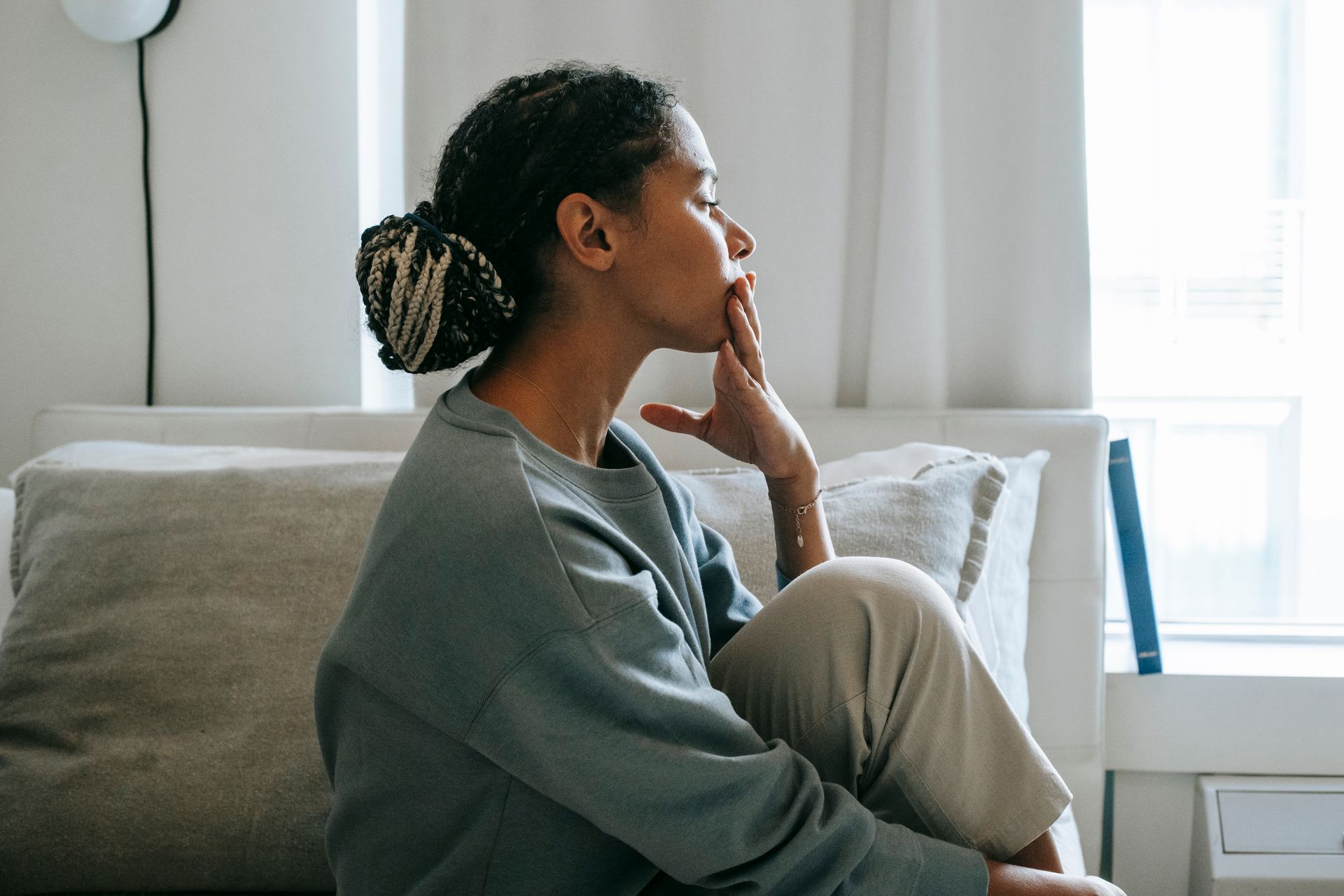
When everyone counts on you, you learn not to feel too much of what hurts. It helps you keep going. But it is often this refusal to feel that causes the most suffering.
I have meditated almost every day for many years. At first, meditation fully recharged me.
Then came a period of my life when I wasn’t happy. I needed change. And during that time, I used meditation to escape my daily life.
Looking back, I’m not sure it was still meditation. I was cutting myself off from my body, my sensations and my emotions. I only wanted to feel good.
This article is about that very human impulse: running from what we feel in order to suffer less, and discovering that this is precisely what makes us suffer.
Refusing what you feel makes you suffer more
There is a formula I really like, made popular by the meditation teacher Shinzen Young:
Suffering = Pain × Resistance.
Pain is part of life: tiredness, tension in the shoulders, a knot in the stomach, sadness, anger. We don’t choose it. Resistance is everything we do to avoid feeling it: clenching our teeth, keeping busy, thinking about something else, “holding on”.
Buddhism puts it with an image: pain is the first arrow, and it can’t be avoided. The second arrow is the one we shoot at ourselves by refusing the first. Psychology confirms this in its own way: the more we try to push an emotion away, the more it tends to come back, and often stronger.
When resistance is strong, even a small pain becomes great suffering. And when we accept to feel what is there, the pain remains, but the suffering decreases. It’s a paradox: we suffer less by accepting to feel more.
The people everyone counts on are often champions of resistance. You have to keep going, others need you, now is not the time. So the body speaks louder: tiredness that won’t go away, back pain, short nights, holidays that start with the flu.
And the emotion we didn’t want to feel sometimes ends up spilling over about a detail, at the wrong moment, with the wrong person.
Meditating to keep going: what if it’s a way of running from yourself?
We hear a lot about the benefits of meditation, and they are real: sleeping better, ruminating less, feeling calmer. But we hear much less about how it can be used to run away.
That’s what happened to me. I meditated to feel good, not to feel what was going on inside me. I was looking for a place where reality, and the suffering that came with it, could no longer reach me.
The book “Spiritual Bypassing” by Robert Augustus Masters was a real wake-up call for me. It describes what the psychologist John Welwood named “spiritual bypassing” back in the 1980s: using spirituality, or meditation, to avoid what hurts instead of going through it. Reading it, I realized how cut off from myself I was, and how much I refused the pain of what I felt in my body.
For people everyone counts on, this trap takes very concrete forms. A ten-minute guided meditation on your phone, between two meetings, to be “operational” again. A session in the evening to calm down after another day where you absorbed everything. Or meditation becoming one more box to tick, one more thing to do well, with guilt when you skip it.
So the problem is not meditation. It’s what we ask of it. If it serves to get you back on your feet so you can keep carrying everything without changing anything, it becomes one more tool to keep going. And whatever isn’t working in your life anymore stays there, waiting.
Coming back to what you feel, little by little
It was by reconnecting with my sensations, my emotions and my body, including while meditating, that I found more well-being in my daily life. Not by trying to feel good, but by accepting to feel what was there.
A simple first step: take a few quiet minutes. Notice what draws your attention, a sound, an image, a sensation in your body, and name it in your head: “hearing”, “seeing”, “feeling”. When you catch yourself thinking about something else, that’s normal. Notice it, and come back. That coming back is what matters.
Some sensations are unpleasant, sometimes truly painful. By welcoming them instead of pushing them away, we often understand better what they have to tell us. And once the message has been heard, they often quiet down.
An important precaution: some very strong sensations are linked to old traumas. The point is not to feel everything at once, at the risk of hurting yourself. Go gently, drop by drop, and get support from a professional trained in these issues. Researchers say so too: a 2021 American study by Willoughby Britton’s team at Brown University shows that the unwanted effects of meditation (anxiety, painful memories resurfacing, a feeling of detachment) are not that rare.
Finally, reconnecting with your body takes time. It’s a path, not a technique you master in a week.
To conclude
If you meditate, or would like to start, ask yourself a few questions:
Why do you want to meditate? To feel what is going on inside you, or to stop feeling anything at all?
Do you need to change something in your life? If so, meditation alone probably won’t be enough. Support can help you see what you can’t see on your own, and dare to act.
Are you looking for well-being? Don’t forget that it also means feeling what is unpleasant.
Are you carrying old wounds? Take care of them first, gently, with a professional.
If you recognize yourself in this article, I suggest we start with an exploration session, to look together at what you avoid feeling and what it costs you.